Source Colloid Cocoa Bean Grinding Machine for Food Processing
Find 30 colloid cocoa bean grinding machine options from verified suppliers. Compare specifications including power, capacity, and customization features for chocolate, nuts, and grain applications to select the right equipment for your production needs.
Key considerations
Products List


Colloid Mill for Mayonnaise Cocoa Processing Machines Peanut Butter Grinder
$1600.00 - $1620.00
Moq: 1


Electric Peanut Butter Machine Grinding Machine Cacao Butter Colloidal Mill
$1660.00 - $1680.00
Moq: 1


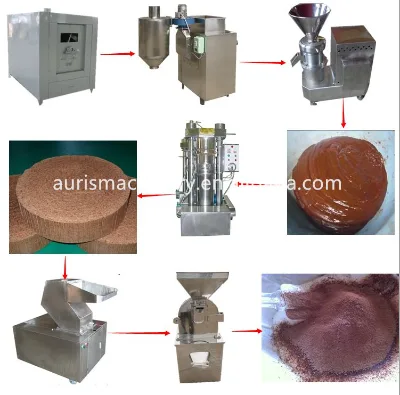
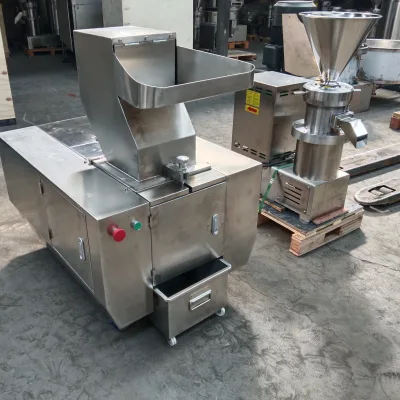
Comprehensive Sourcing Guide
Strategic Sourcing Guide for Colloid Cocoa Bean Grinding Machines
Understanding the Technical Landscape of Cocoa Grinding Equipment
When sourcing a colloid cocoa bean grinding machine, buyers must first distinguish between general-purpose grinding units and specialized equipment designed for the viscosity and particle size requirements of chocolate production. The market presents a diverse array of machinery, ranging from universal cylindrical grinders to multi-use grinding machines specifically configured for food applications. A critical observation in the current supply landscape is the variation in processing objects; while some units are engineered for gear manufacturing, others are explicitly optimized for food ingredients such as nuts, cocoa beans, and chocolate.
The technical specifications for a viable cocoa grinding solution often center on the colloid mill architecture. These machines typically operate on a principle of high-shear mixing and homogenization, essential for reducing cocoa particles to the fine consistency required for premium chocolate. In the observed product data, specific models such as the JM-F120, JM-F80, and JM-F50 represent a range of capacities and configurations available in the market. The physical dimensions of these units vary significantly, with some models measuring approximately 6007001450mm, while others, like the JF100 or SL series, may feature dimensions around 900X350X900mm.
Power consumption is another pivotal technical parameter. The observed data indicates a power range between 5.5kw and 7.5kw for several units, with specific models operating at 5.5kw. This energy requirement must be matched against the facility's electrical infrastructure, particularly regarding voltage compatibility, which is often listed as 220V/380V. The weight of the machinery is equally important for installation planning; observed weights range from 170kg to 250kg, necessitating a robust floor foundation. The controlling mode for these advanced units is predominantly CNC (Computer Numerical Control), which ensures precision in the grinding process and allows for repeatable results, a non-negotiable factor in food manufacturing where texture consistency is paramount.
Compliance and Certification Verification Protocols
In the food and beverage industry, regulatory compliance is not merely a formality but a prerequisite for market access. When evaluating potential suppliers for colloid cocoa bean grinding machines, buyers must rigorously verify the certification status of the equipment. The supply data highlights several recurring certification standards, including ISO, CE, SGS, and BV. Specific product listings reference standards such as ISO9001, which pertains to quality management systems, and CE, which indicates conformity with health, safety, and environmental protection standards for products sold within the European Economic Area.
However, buyers must exercise caution regarding the specificity of these claims. While "ISO CE" appears as a combined attribute in some listings, it is essential to verify that the certification applies specifically to the food-grade components of the machine. The presence of certifications like ISOSAMET and CE in the data suggests a focus on safety and standardization, but the exact scope of these certifications must be confirmed with the supplier. For instance, a machine labeled with "ISO9001" demonstrates the manufacturer's commitment to quality processes, but it does not automatically guarantee that the machine's contact parts are food-safe unless explicitly stated.
Furthermore, the "Standard" field in product listings often repeats the model number (e.g., JM-F120 listed as its own standard), which can be a data artifact. Buyers should not rely on this as a substitute for recognized international standards. Instead, the verification process should focus on whether the machine meets the specific hygiene standards required for chocolate production, such as those set by local food safety authorities or international bodies like the FDA or EFSA. The presence of a "Video Outgoing-Inspection" service is a positive indicator, allowing buyers to visually verify the machine's condition and assembly before shipment, adding a layer of transparency to the compliance check.
Cost Drivers and Pricing Structure Analysis
The financial investment in a colloid cocoa bean grinding machine is influenced by a complex interplay of factors, including capacity, automation level, and material construction. The observed price range in the market spans from 750 USD to 50,000 USD, a wide disparity that reflects the difference between basic grinding units and fully automated, high-capacity systems. The minimum order quantity (MOQ) is generally low, observed between 1 and 2 units, which suggests that these machines are often sold as individual capital assets rather than bulk industrial orders.
Several specific cost drivers emerge from the product attributes. The "Automatic Grade" of the machine is a significant factor; units described as "Automatic" or featuring "CNC" controlling modes command higher prices due to the advanced electronics and software integration required. The power rating also correlates with cost; models with higher power outputs (e.g., 7.5kw vs. 5.5kw) typically involve more expensive motors and electrical components. Additionally, the "Customization" availability allows buyers to tailor the machine to specific production needs, but this often incurs a premium over standard off-the-shelf models.
Packaging and logistics also contribute to the total cost of ownership. The standard packaging for these units is often a "Wooden Case" or "Wood Box for Free Fumigation," which adds to the shipping weight and volume. The "Shipment" method, described as "by Fast Ship," implies expedited logistics, which may increase the initial purchase price but reduces the overall lead time. Buyers should also consider the "Production Time," which is listed as 2 days for some models, indicating that the machine is often ready for immediate dispatch, whereas customized units may require longer manufacturing cycles.
Typical Applications and Functional Versatility
While the core keyword focuses on cocoa bean grinding, the functional capabilities of the observed machinery extend to a broader range of food processing applications. The data indicates that these machines are designed for "Multi-Use" operations, capable of processing various raw materials. Specific functions listed include crushing corn, sorghum, wheat, beans, and crushed cake, as well as butter grinding for nuts like chili, peanuts, almonds, cashews, and chestnuts. This versatility makes the colloid mill a valuable asset for facilities that process multiple types of nuts or grains alongside cocoa.
The "Application" field explicitly mentions "Chocolate," confirming the machine's suitability for the target keyword. The "Function" attribute further details the ability to perform "Butter Grinding Mill" operations, which is critical for creating the smooth, emulsified texture required in chocolate confectionery. The "Raw Material" specification lists "Nuts," which aligns with the processing of cocoa beans, as both require similar shear forces to break down cell walls and release oils.
However, buyers must be aware that some listed machines are designed for different primary purposes. For example, the "Processing Object" for some units is listed as "Gear," indicating that not all cylindrical grinders in the market are suitable for food. Therefore, when selecting a machine for cocoa, the buyer must ensure the specific model is designated for food applications. The "Applicable Industries" field confirms that "Food & Beverage Factory" is the primary sector, but the specific configuration must match the viscosity and particle size requirements of the cocoa product.
Supplier Evaluation and Operational Readiness
Evaluating a supplier for a colloid cocoa bean grinding machine requires a focus on their ability to provide reliable support and transparent information. The "Customization" attribute is a strong indicator of a supplier's flexibility; a supplier that offers customization is more likely to adapt the machine to specific production line requirements. The "Production Time" of 2 days suggests a responsive manufacturing process, but buyers should verify if this applies to standard models or if customized orders require longer lead times.
The "Video Outgoing-Inspection" service is a critical tool for supplier evaluation. It allows the buyer to conduct a remote quality check, ensuring that the machine is assembled correctly and functions as expected before it leaves the factory. This is particularly important given the wide price range and the potential for variation in build quality. Buyers should also inquire about the "Condition" of the machine, which is listed as "New," ensuring that no refurbished or used units are inadvertently supplied.
Location is another factor in supplier evaluation. The "Prod Origin" is consistently listed as "Henan, China" or simply "China." While this provides a geographic baseline, buyers should verify the specific factory location to assess logistics capabilities and potential trade barriers. The "Weight" and "Dimension" specifications provided in the data (e.g., 250kg, 6007001450mm) are essential for planning the factory floor layout and ensuring the supplier's shipping methods can accommodate the machine's size.
Quality Control and Long-Term Procurement Considerations
Ensuring the long-term reliability of a colloid cocoa bean grinding machine involves a proactive approach to quality control and maintenance planning. The "Precision" attribute is a key quality indicator, suggesting that the machine is capable of achieving fine particle sizes consistently. However, buyers should verify the specific tolerance levels and the maintenance schedule required to maintain this precision over time. The "Abrasives" used, such as the "Grinding Wheel," are consumable parts that will require replacement; understanding the availability and cost of these parts is crucial for long-term procurement planning.
The "Package" details, such as the "Wooden Case," provide some protection during transit, but buyers should inspect the machine immediately upon arrival for any signs of damage. The "Shipment" method, described as "Fast Ship," implies a quick delivery, but the buyer should have a clear protocol for receiving and inspecting the goods. The "Power Source" being "Electric" means that the machine will require a stable power supply; any fluctuations in voltage could affect the machine's performance and lifespan.
For long-term procurement, buyers should consider the "Advantage" of the machine, such as "High Productivity" and "Easy Operation." These features suggest that the machine is designed for efficiency and user-friendliness, which can reduce operational costs and training time. However, the "Capacity" of the machine, listed as 100-300kg/H, must be matched against the facility's production volume to avoid bottlenecks or underutilization. Finally, the "Standard" compliance, including ISO9001 and CE, should be maintained through regular audits and adherence to the manufacturer's recommended operating procedures to ensure the machine remains safe and compliant throughout its lifecycle.
Comparative Analysis of Key Machine Specifications
To assist buyers in making an informed decision, the following table summarizes the key specifications observed in the market for colloid cocoa bean grinding machines. This comparison highlights the variations in model numbers, dimensions, power, and weight, which are critical for matching the machine to specific production needs.
| Model Reference | Dimensions (LWH) | Power (kW) | Weight (kg) | Primary Function | Certification |
|---|---|---|---|---|---|
| 30B | 6007001450mm | 5.5-7.5 | 250 | Multi-Use Grinding | ISO, CE |
| JM-F120 | N/A | N/A | N/A | Colloid Mill | ISO9001, CE, SGS |
| JM-F80 | N/A | N/A | N/A | Colloid Mill | JM-F80 |
| JM-F50 | N/A | N/A | N/A | Colloid Mill | JM-F50 |
| JF100 | N/A | N/A | N/A | Colloid Mill | JM-F100 |
| SL | 900X350X900mm | 5.5 | 170 | Butter Grinding | ISOSAMET, CE |
| TZ | N/A | N/A | N/A | N/A | N/A |
Note: "N/A" indicates that specific data points were not explicitly provided in the source text for that model. Buyers should request these details directly from the supplier.
This table illustrates that while some models have clearly defined dimensions and power ratings, others rely on model numbers that may imply specific configurations. The "SL" model, for instance, offers a compact footprint (900X350X900mm) and lower weight (170kg), making it suitable for smaller facilities, whereas the "30B" model is larger and heavier, potentially suited for high-volume production. The power range of 5.5-7.5kw suggests that higher capacity models require more energy, which must be factored into the operational cost analysis.
Final Procurement Recommendations
In conclusion, sourcing a colloid cocoa bean grinding machine requires a meticulous approach that balances technical specifications, compliance requirements, and cost considerations. Buyers should prioritize machines that explicitly state their suitability for food applications, particularly chocolate and nut processing, and verify that all certifications are current and applicable to the specific model. The wide range of prices and specifications necessitates a detailed comparison of features, such as power, dimensions, and automation level, to ensure the selected machine aligns with the facility's production capacity and budget.
By leveraging the available data on model numbers, dimensions, and certifications, buyers can make informed decisions that minimize risk and maximize the efficiency of their chocolate production lines. The emphasis on "High Productivity" and "Easy Operation" suggests that the right machine can significantly enhance operational performance, provided that the supplier is reliable and the machine is properly maintained. Ultimately, the success of the procurement process depends on thorough due diligence, clear communication with suppliers, and a rigorous quality control framework that extends from the factory floor to the final installation.
FAQs
What certifications do colloid cocoa bean grinding machines typically have?
These machines often carry ISO, CE, SGS, and BV certifications. Specific listings may also reference ISO9001 for quality management or ISOSAMET for safety standards, ensuring compliance with international requirements for food processing equipment.
Can I customize the specifications of a colloid cocoa bean grinding machine?
Yes, customization is available for these units to meet specific production needs. Buyers can request tailored configurations, though this may affect the standard production time and pricing compared to off-the-shelf models.
How much does a colloid cocoa bean grinding machine cost?
The observed price range spans from 750 to 50,000 USD depending on the model and features. Costs vary based on power ratings, automation levels, and whether the unit includes specialized food-grade components for chocolate production.
What is the typical power consumption for these grinding machines?
Power consumption typically ranges between 5.5kw and 7.5kw for standard units. Specific models may operate at 5.5kw with voltage compatibility of 220V or 380V to suit different electrical infrastructure setups.
Which raw materials can a colloid cocoa bean grinding machine process?
These machines can process nuts like peanuts, almonds, and cashews, as well as cocoa beans for chocolate. Some multi-use models also handle corn, sorghum, wheat, and beans for broader food and beverage applications.
What is the production time for a new colloid cocoa bean grinding machine?
The production time is listed as 2 days for standard models ready for dispatch. Customized units may require longer manufacturing cycles, so buyers should verify lead times before placing orders.
How is a colloid cocoa bean grinding machine packaged for shipment?
Machines are typically packed in wooden cases or wood boxes for free fumigation. This packaging protects the unit during transit and ensures it meets international shipping standards for heavy industrial equipment.